The key to adopting AI is not the technology but the decision
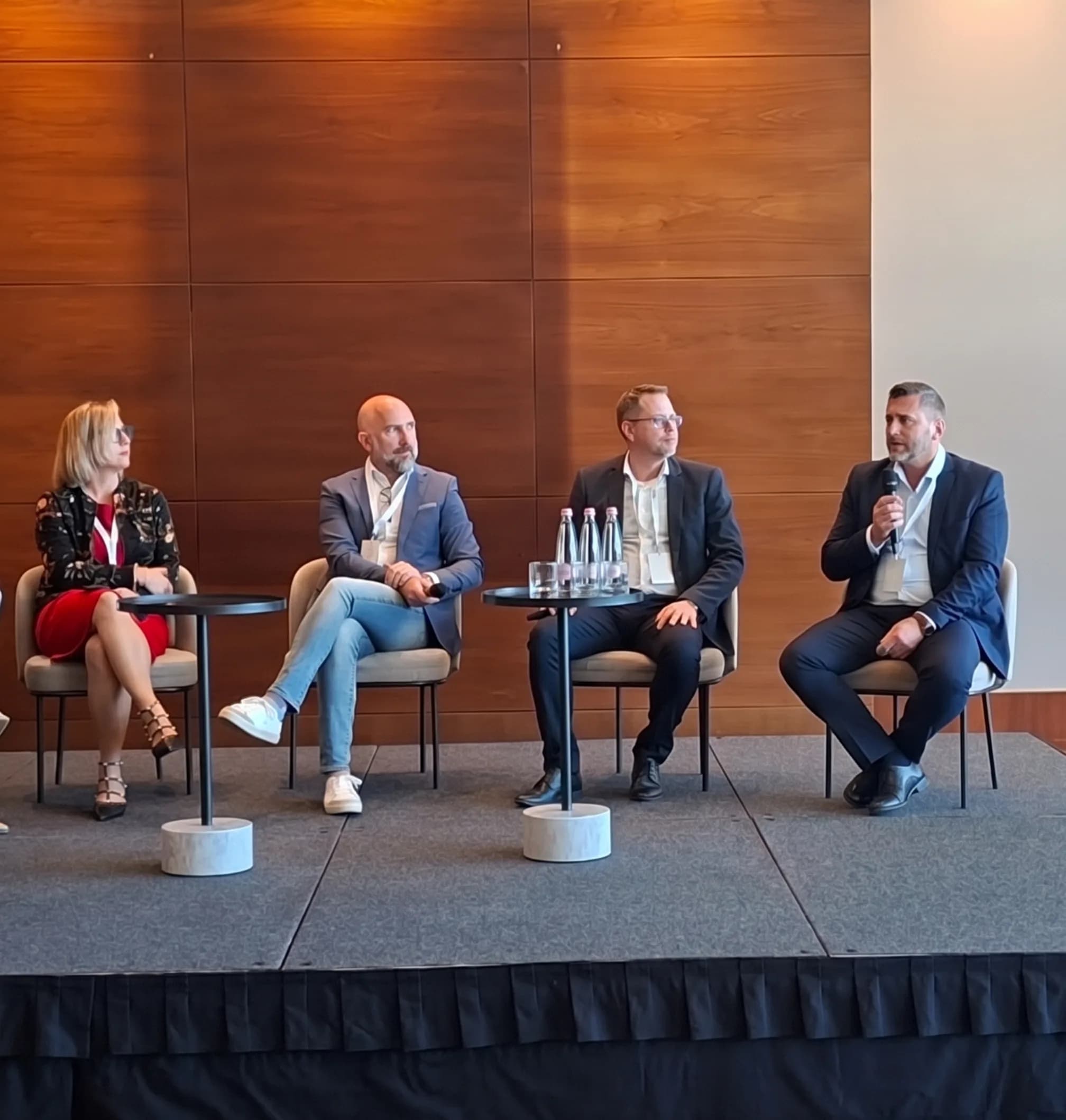
The lesson of the German–Hungarian Business Day panel discussion: the AI tools and the ideas are already there; whether adoption succeeds depends on who sets the direction and the entry points, and what the organisation consciously leaves for later.
The key to adopting AI today is not the technology but the leadership decision: who sets the direction, which entry points the organisation starts with, and what it does not spend energy on right now. This was one of the clearest lessons of the panel discussion at the German–Hungarian Business Day. I took part in the discussion as BlackBelt's founding owner.
Why is adopting AI a leadership task today?
Because the tools and the ideas already exist, but focus is often missing. Most organisations have access to AI tools, and there is no shortage of ideas either. The real question is who sets the direction, who chooses the most important entry points, and who also says what is not worth spending energy on right now. Adopting AI is therefore primarily a leadership task today, not merely an IT project.
How is AI different from an earlier IT investment?
In that at the start of the journey there is often no finished roadmap or reliable return-on-investment calculation. AI therefore cannot always be approached with the logic of earlier IT investments: the decision has to be made while the exact outcome cannot yet be seen.
What does an AI champion add?
The AI champion is the person inside the organisation who turns experimentation into a working solution. They do three things:
- Uncover the real problems: they do not start from the tool, but from where work gets stuck today.
- Give experimentation a focus: they choose what is worth working on now, and what is not.
- Turn experience into a working solution: successful trials become part of everyday operations.
How is it worth getting started?
Step by step, without fearmongering. You do not have to begin with a large, all-encompassing programme, but by finding where AI can create value — regardless of the industry, the task or the role.
Where does AI already deliver results today?
At the panel I brought concrete examples from BlackBelt's projects, across several industries. What the examples have in common is that none of them started from the technology, but from a well-defined task:
- Logistics: the application developed for MLSZKSZ.
- Pharmaceuticals: the concept of Richter's documentation-processing system.
- Retail: sales-support solutions with which we achieved significant cost optimisation.
- Procurement: the AI agents of VendorFlow, our own solution, enable 70% working-time savings in supplier selection.
- Warehousing: the smart-glasses solution of RackInspect makes warehouse inspections real-time and simpler.
What is the next step?
The technology is ready — the next step takes the courage to decide. The question I closed the discussion with is for every leader: in which area of your organisation could a well-focused AI development deliver the most?
Frequently asked questions
Adopting AI in brief, in three questions.
Do you need a finished roadmap to start AI development?
No. With AI there is often no finished roadmap or reliable return-on-investment calculation at the start of the journey. It is worth starting step by step, with one well-chosen entry point.
Who is responsible for adopting AI in an organisation?
Primarily the leadership: they set the direction and the entry points. An AI champion inside the organisation helps a great deal with the implementation.
Does AI only work in certain industries?
No. BlackBelt's examples range from logistics through pharmaceuticals to retail: AI creates value where it solves a concrete task.
This article is based on András Wolf's LinkedIn post.